
Motherboard Repair Explained: What It Fixes & When Worth It
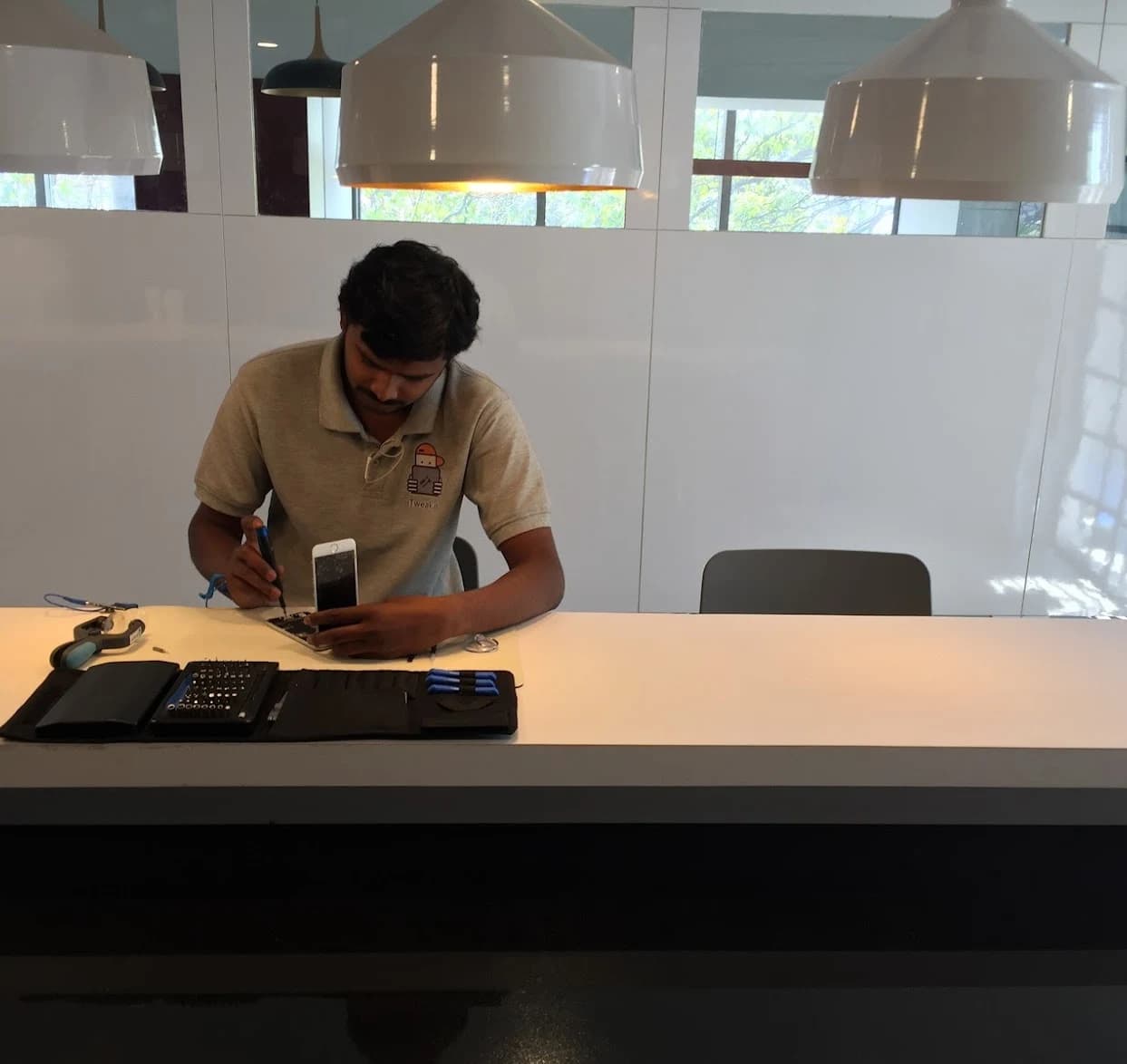
What "motherboard repair" actually means
The motherboard is the main circuit board that ties everything together: the processor (SoC), memory (RAM and NAND storage), the power-management chip (PMIC), charging circuitry, display and backlight drivers, and dozens of supporting components like resistors, capacitors, coils and diodes. When someone is told a phone or laptop "needs a new motherboard," what has usually failed is not the entire board, but one or two tiny components on it.
There are two very different things a shop can mean by motherboard repair. The first is board replacement: removing the faulty board and fitting a new or donor board. It is fast, but expensive, and on phones it often wipes your data and can break Face ID, Touch ID or serial-linked features. The second is chip-level repair (also called component-level or micro-soldering repair): finding the one failed component, removing it under a microscope, and soldering in a healthy replacement, leaving the rest of your board and your data intact.
This guide is mostly about the second kind, because that is the part the directories never explain and the part that usually saves you the most money.
What chip-level repair can actually fix
A surprising share of "dead" or "needs new motherboard" devices come down to a short list of well-understood component faults. These are the failures a board-level technician sees most often:
- No power / dead board: a shorted capacitor, a failed PMIC, or a blown rail stopping the board from powering on at all.
- Will not charge or charges intermittently: a failed charging IC (Apple's Tristar/Tigris or the U2 charging IC on many boards) or damage around the charging port traces.
- No display or no backlight: a blown backlight boost circuit (filter, coil or diode), or a failed display driver line, so the phone is on but the screen stays black.
- Boot loops and no-boot: failures in the power sequence, the audio IC (the classic iPhone 7 "loop disease"), or baseband/PMIC faults.
- No service / no network: a failed baseband or RF section, common after a drop or a botched earlier repair.
- Storage failure / stuck on logo: a failing NAND chip, sometimes recoverable by reballing or reprogramming to rescue data.
- Liquid damage corrosion: tiny corroded joints and shorted components after water ingress, cleaned and rebuilt joint by joint.
- Earlier repair gone wrong: lifted pads, tombstoned parts or bridged solder from a previous shop.
What it usually cannot (or should not) fix
Honesty matters more than a hard sell, so here are the cases where chip-level repair is not the right answer. A severely cracked or delaminated board, where the internal copper layers are damaged, is often beyond economic repair. A modern SoC (the main processor) that has truly failed is generally not worth replacing, because the part cost, the risk, and the labour rarely make sense against a board swap or a new device.
Some faults are tied to security hardware. On iPhones, the pairing between certain chips and the board means a few features (like Face ID dot-projector function) cannot be restored if the original part is destroyed, no matter how skilled the soldering. A good technician will tell you this before starting, not after. The right outcome is sometimes "replace the board" or even "this device is not worth repairing" and a trustworthy shop will say so.
How chip-level motherboard repair works, step by step
Done properly, board-level repair is a methodical diagnostic process, not a guess-and-swap. Here is the typical flow on the bench:
- Intake and symptom history: what happened (drop, liquid, dead overnight, after another repair), and what the device does now.
- Visual inspection under a stereo microscope: looking for corrosion, burnt components, lifted parts or bridged solder.
- Power-rail and short detection: measuring the board's power rails and using short-detection methods (including controlled current injection and thermal imaging) to find where current is being wrongly drawn.
- Schematic and boardview tracing: following the failed signal back through the board's power topology to the exact component or net responsible, using the device's schematic and boardview.
- Component-level removal: heating and lifting the faulty IC or passive with hot air and a microscope, without disturbing neighbours.
- BGA reballing or replacement: for chips with hidden ball-grid-array pads (PMIC, NAND, CPU sub-assemblies), cleaning the pads and reballing the chip with fresh solder balls before reseating.
- Cleaning and rebuild: ultrasonic or IPA (isopropyl alcohol) cleaning for liquid-damage boards, then rebuilding corroded joints.
- Reflow, reseat and verify: fitting the healthy part, then testing the board powers, charges, displays and boots correctly before reassembly.
- Full function test: a multi-point check so the original fault is fixed and nothing new was introduced.
Where AI-assisted diagnosis fits in
The hardest part of board-level repair has always been diagnosis: correctly tracing a dead rail back to the one component at fault, on a board with hundreds of parts. Traditionally this means a technician reading dense schematics and boardviews by hand. In our workshop we increasingly use AI-assisted diagnostic tools alongside the microscope and meter to speed up and cross-check that tracing, while the actual soldering stays entirely in skilled human hands.
One example worth naming, because it is genuinely interesting, is Wrench Board, a source-available diagnostic workbench (it is source-available, not open source) built by an independent microsoldering technician at Repair Valley. It ingests a device's schematic PDF and boardview file, builds a model of the board's power topology, and lets a technician interrogate it: simulate which rails and parts die if a given chip fails, or work backwards from a symptom to a ranked list of suspect components and the next best point to probe. A useful safeguard is that the tool will not invent a component name; every reference it gives traces back to the actual parsed board, and unverifiable tokens are flagged rather than presented as fact. When the technician wants the tool to look at the actual board, they initiate a still capture from a USB microscope or webcam, so "it sees the board" means a technician-driven photo on the technician's optics, not an autonomous eye roaming the bench. It can also recall confirmed past repairs of the same device to inform the next one; that is recalling field reports, not training the underlying AI on customer data. Wrench Board placed 2nd in Anthropic's "Build with Opus 4.7" hackathon in April 2026.
To be clear and fair: iTweak did not build Wrench Board, did not enter that hackathon, and is not affiliated with Anthropic or Repair Valley. We simply use AI-assisted diagnostics as one tool in our own work. The decision, the soldering and the warranty are ours.
Motherboard repair cost in India: approximate ranges
Cost depends on the device, the failed component, and whether a part needs reballing. As a rough guide for the Indian market, the ranges below are typical for chip-level repair. Treat them as approximate market-survey figures, not a quote: your exact price is confirmed only after diagnosis, when you can see the actual fault.
| Fault type | Typical chip-level repair (approx ₹) | Notes |
|---|---|---|
| Charging IC (Tristar/U2) replacement | ₹2,500 - ₹6,000 | Common no-charge fault; often far cheaper than a board swap |
| Backlight / no-display circuit | ₹2,000 - ₹5,500 | Boost circuit components, screen otherwise fine |
| PMIC / no-power short | ₹3,500 - ₹9,000 | Depends on chip and reballing |
| Boot-loop / audio IC | ₹3,000 - ₹7,500 | Includes jumper work on some models |
| Liquid-damage board rebuild | ₹3,500 - ₹12,000 | Wide range; depends on corrosion spread |
| NAND / storage (data recovery) | ₹6,000 - ₹18,000+ | Higher when rescuing data from a failing chip |
| Laptop / MacBook board (power, charging, GPU) | ₹4,000 - ₹20,000+ | Varies hugely by model and component |
Repair vs replacement: a simple way to decide
The smart question is not "can it be repaired?" but "is repairing it the best value for this device?" Use this quick comparison to weigh chip-level repair against a full board replacement before you commit.
| Factor | Chip-level repair | Board replacement |
|---|---|---|
| Cost | Usually lower (one component) | Higher (whole board, new or donor) |
| Your data | Kept on the original board | Often lost; data may not transfer |
| Linked features | Original chips stay paired | Face ID / Touch ID / serial features may break |
| Turnaround | Hours to a couple of days | Often faster if a board is in stock |
| Best for | Single known faults, data recovery, value | Catastrophic board damage, dead SoC |
How to choose a motherboard repair shop
Board-level repair quality varies enormously, and a bad attempt can turn a fixable board into a dead one. Use this checklist before you hand over your device:
For reference, our own process includes an 80-point diagnostic, a see-the-fault-before-you-pay policy, up-to-1-year warranty, 100% money-back on misdiagnosis, free pan-India insured pickup and a digital invoice. We are ISO 9001:2015 certified and work on multiple brands across Marathahalli (Bangalore), Mumbai and Chennai. You should expect comparable standards anywhere you spend serious money on a board.
- Do they actually do micro-soldering in-house, or do they outsource and mark it up?
- Will they diagnose first and show you the real fault before you pay?
- Is there a written warranty on the repair (ideally up to a year)?
- What happens on misdiagnosis: is there a money-back policy?
- Do you get a proper digital invoice, not just a verbal price?
- Can they handle your brand (Apple and Android, phone and laptop), or only one?
- Do they offer safe, insured pickup if you are not local?
Frequently asked questions
Is motherboard repair the same as logic board repair? Yes. "Logic board" is Apple's term; in India most people say "motherboard." Both mean the main circuit board, and chip-level repair works the same way on either.
Will I lose my data during motherboard repair? With chip-level repair your storage chip stays on your original board, so data is usually preserved. A full board replacement is where data is most at risk. For a failing storage (NAND) chip, data recovery is sometimes possible during the repair.
How long does a motherboard repair take? A single, clearly diagnosed fault is often same-day or one to two days. Liquid-damage rebuilds and storage recovery can take longer because of cleaning, reballing and testing.
Is chip-level repair safe and reliable? Done by an experienced micro-soldering technician with proper diagnosis, yes. The risk comes from inexperienced attempts. A written warranty and a money-back-on-misdiagnosis policy are good signals.
My phone fell in water and died. Is the motherboard always gone? Not always. Many liquid-damaged boards are recoverable if cleaned quickly, before corrosion spreads. The sooner it is powered off and brought in, the better the odds.
Can you tell me the price over the phone? Only as an approximate range. The exact cost depends on which component failed, which is confirmed by diagnosis. A trustworthy shop shows you the fault before charging you.
Get it fixed
More board-level repair guides
The rest of our deep-dive series on board-level repair and AI-assisted diagnostics.
- Boardview Software: ZXW, WuXinJi, OpenBoardView & AI
- Microsoldering & Reballing: Chip-Level Repair Explained
- iPhone Not Charging? Port, Battery or Charging IC
- iPhone Won't Turn On? Boot-Loop & Board-Level Diagnosis
- AI, Microsoldering and the Right to Repair
- Wrench Board: the AI workbench bringing Claude Opus to board-level repair
Related guides & repairs
Ready to fix it? See our phone repair service. Browse every Other brands repair-cost guide.